

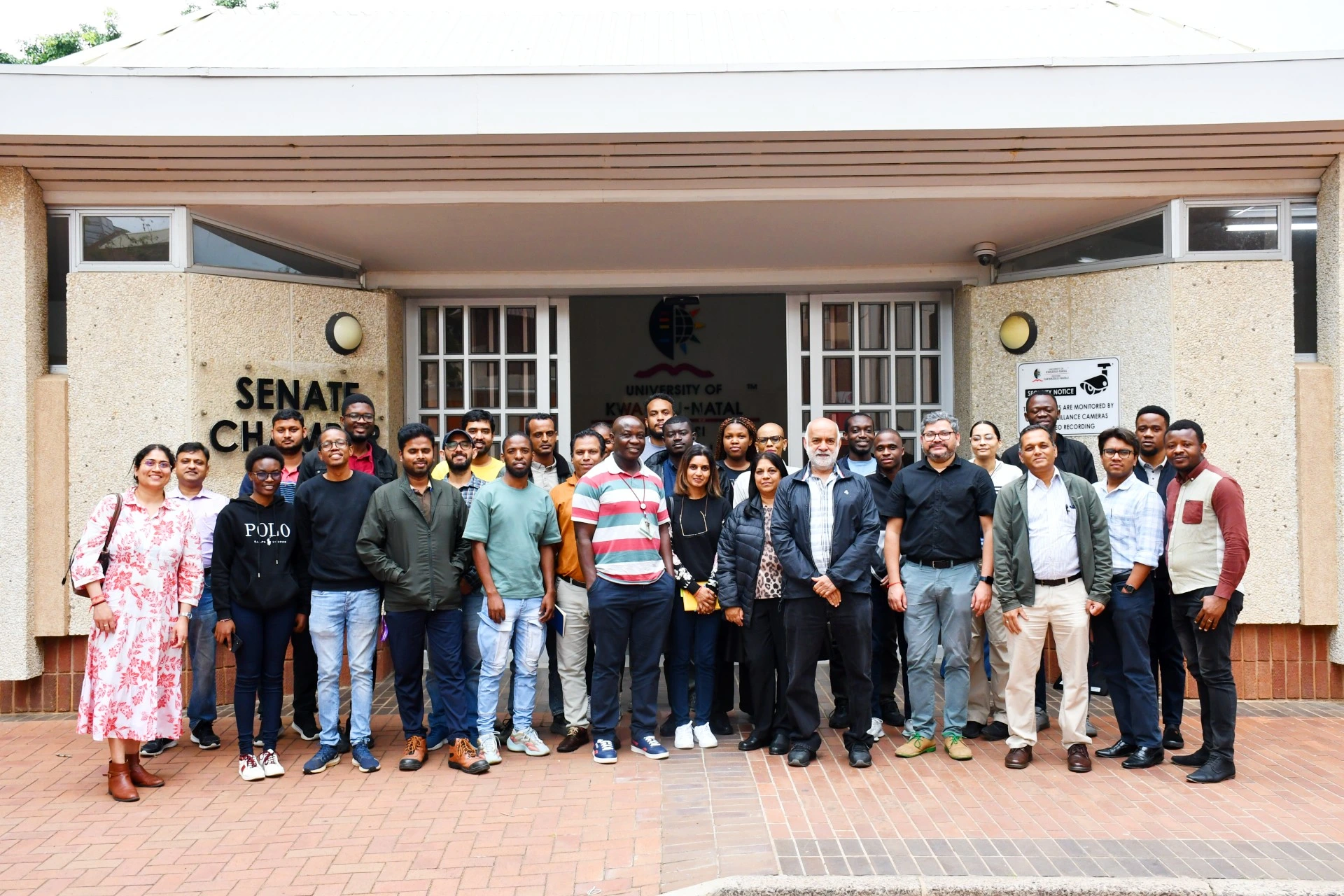
“The S-Curve: Nurturing a ‘Therapeutics Engine’ at the IDM, UCT–From a Postdoc to a Pioneer”.
This was the title of an inspiring guest lecture hosted by the University of KwaZulu-Natal’s Discipline of Pharmaceutical Sciences where Dr Vinayak Singh – a prolific researcher in the Department of Chemistry at the University of Cape Town (UCT) – highlighted the evident need for continued efforts in drug discovery towards outsmarting complex diseases such as TB, wherein he is an expert.
From primary infection, to latent infection, active TB disease, drug resistance, multi-drug and extreme drug resistance, a clear picture is painted about the need for pertinent interventions that scientists have been at the coal face for generations.
A key member of the Institute of Infectious Disease and Molecular Medicine (IDM), where he leads a dynamic research group dedicated to addressing the global challenge of antimicrobial resistance (AMR), Singh said, “Theoretically, sooner or later bacteria will develop resistance against new drugs and therefore there is a constant need to discover new drugs with novel mechanisms of action.”
Through his innovative research, Singh and his team strive to develop new, effective, and safer therapeutic agents to shorten TB treatment regimens and overcome existing drug resistance, contributing directly to the global fight against this ancient disease.
Singh’s lecture was a call to action, especially to young researchers, to understand that the growing threat of drug-resistant disease strains required that scientists devote themselves to a lifetime drug discovery. He said the main ingredients of his presentations were gratitude, collaboration, opportunity, ideas, success, and learnings.
Reflecting on the numerous local and international grants that have supported his research, Singh mentioned scientific giants that he used to look up to as a novice researcher but who have grown to become his friends and collaborators. “Never underestimate your collaborators, it can go a long way! When I talk about collaborators, I am talking about people I can even WhatsApp freely, when I could have never imaged us to be at the same calibre some 10 or 20 years ago.”
Singh explained that, similar to a bacterial growth curve, academic development often begins slowly and steadily. Initially, there is a lag phase of learning and adaptation, followed by a period of exponential growth as knowledge and skills rapidly increase. Eventually, progress stabilizes during a stationary phase, and without continued effort, it may enter a decline or ‘death’ phase. This analogy underscores the importance of proactive and continuous learning in the development of scientists, emphasizing that sustained effort is essential to maintain growth and avoid stagnation.
Members of the audience said they were inspired by Singh’s passion, insights, accolades and ability to secure research grants that would save the lives of millions. He shared tips to thrive on if you want to become a principal investigator with the audience. Amongst these were:
· Papers are important, but it is probably more critical ‘the attitude and mindset’
· Be mentally strong
· Build resilience
· Do other activities outside the lab
· Improve your creativity – practice lateral thinking
· Science is more than academia
· Practice your soft skills, and
· Build your network!
One of the attendees, a chemistry technical officer, Dr Sizwe Zamisa, said the not only did he find the lecture stimulating and insightful, it also opened his eyes to scientific possibilities in medicinal chemistry.
Event organizer Professor Rajshekhar Karpoormath expressed his gratitude to Dr Singh for delivering such an insightful and motivating lecture. “Inviting prolific scientists like Dr Vinayak Singh to share their journeys and research excellence is vital in inspiring both staff and students. Such engagements not only broaden our scientific perspectives but also reinforce the collaborative spirit essential for advancing global drug discovery efforts,” Karpoormath said.
Words and photo: Lunga Memela


